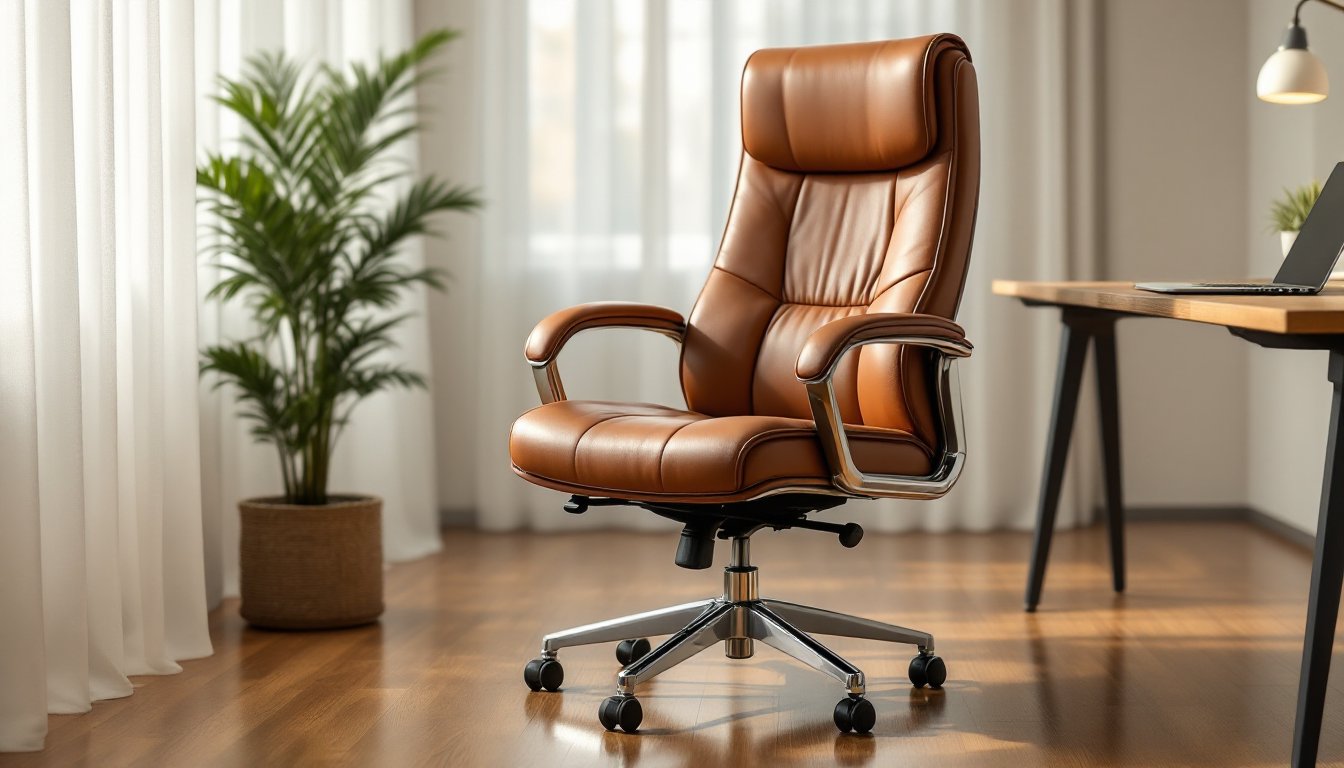
A quality leather office chair with wheels can transform a cramped home office into a workspace that actually works. But the options are overwhelming, split-grain versus full-grain, hard casters versus soft, gas lifts that fail after six months versus cylinders built to last. Whether someone’s setting up a new workspace or replacing a chair that’s seen better days, the right choice comes down to understanding materials, mechanics, and what kind of abuse the chair will take. This guide walks through the features that matter, the maintenance that extends lifespan, and the fixes that save a trip to the landfill.
Table of Contents
ToggleKey Takeaways
- A leather office chair with wheels combines mobility, durability, and professional aesthetics, lasting 10–15 years with proper maintenance compared to 3–5 years for fabric alternatives.
- Choose full-grain or top-grain genuine leather for daily use, verify the gas cylinder meets BIFMA safety standards, and prioritize adjustable lumbar support and armrests for all-day comfort.
- Select soft casters for hardwood and tile floors to prevent scratching, opt for 3-inch diameters over floor transitions, and replace casters easily using universal stems.
- Maintain genuine leather with weekly dry microfiber cloth cleaning and monthly conditioning to prevent cracking, while positioning the chair away from direct sunlight and maintaining 40–60% humidity.
- DIY upgrades like swapping casters ($20–$40), replacing gas cylinders ($25–$50), and reupholstering panels ($300–$500 savings) extend your leather office chair’s lifespan and customize comfort.
Why Choose a Leather Office Chair With Wheels for Your Home Office?
Leather office chairs with wheels offer a combination of mobility, durability, and professional aesthetics that mesh and fabric options struggle to match. The primary advantage is ease of movement, five-point caster bases allow users to pivot, roll to filing cabinets, and reposition without standing, which reduces strain during long work sessions.
From a durability standpoint, genuine leather resists pilling, tearing, and the permanent indentations that plague foam-backed fabrics. A well-maintained leather surface can last 10–15 years, while most fabric chairs show wear within 3–5 years. Leather also repels dust mites and pet dander more effectively than woven materials, making it a practical choice for allergy-prone households.
The aesthetic component matters too. Leather chairs project a finished, cohesive look that complements both traditional wood desks and modern standing desk setups. For anyone conducting video calls or client meetings from home, the visual backdrop carries weight. That said, leather requires consistent care, neglect leads to cracking, especially in dry climates or rooms with direct sun exposure.
Key Features to Look for When Shopping for a Leather Office Chair
Start with the frame and base construction. Steel or aluminum frames handle heavier loads and resist wobble better than plastic assemblies. Check the weight rating, most standard chairs max out at 250 lbs, but heavy-duty models support 300–400 lbs. A five-star base is non-negotiable: four-point designs tip easily.
Next, examine the gas cylinder (the lift mechanism). Class 4 cylinders meet BIFMA (Business and Institutional Furniture Manufacturers Association) standards for safety and longevity. Cheap cylinders fail catastrophically, search “office chair explosion” for a sobering reminder. The cylinder should adjust smoothly without requiring excessive force.
Lumbar support separates usable chairs from decorative ones. Adjustable lumbar mechanisms let users dial in the curve to match their spine. Fixed lumbar works only if it aligns perfectly with the user’s lower back, which is hit-or-miss. Chairs without lumbar support cause slouching and lower back fatigue within an hour.
Armrests should adjust in at least two directions, height and width. Fixed-width armrests force awkward shoulder positions, especially for users working at keyboards for extended periods. Look for armrests with polyurethane padding rather than hard plastic: the latter digs into elbows.
Finally, check the tilt mechanism and tension control. A functional tilt lock allows users to fix the chair at multiple angles, not just upright. Tension adjustment lets lighter or heavier users customize the resistance when leaning back. Skip chairs that lack these features, they’re not designed for all-day use.
Wheel Types and Floor Compatibility
Hard casters (usually nylon or hard plastic) roll smoothly on carpet but scratch and gouge hardwood, laminate, and tile. They’re standard on most office chairs because commercial spaces use low-pile carpet.
Soft casters (polyurethane or rubber-coated) protect hard floors and roll quietly, but they struggle on thick carpet and collect debris. For a home office with hardwood or luxury vinyl plank (LVP), soft casters are mandatory unless someone wants to replace flooring in two years.
Diameter matters. Standard 2-inch casters work on flat surfaces, but 3-inch casters roll more easily over transitions, cables, and area rugs. Locking casters on the front two wheels prevent the chair from rolling during aggressive typing or standing-to-sitting transitions, useful on tile or polished concrete.
Most chairs use a grip-ring stem (the caster pops into a socket in the base). Replacement is simple: pull the old caster out with pliers, push the new one in until it clicks. Universal casters fit most chairs, but verify the stem diameter (7/16-inch or 11mm is standard). A chair mat is an alternative to swapping casters, but mats crack, curl, and look industrial.
Real Leather vs. Faux Leather: Which Is Right for Your Needs?
Genuine leather comes in three common grades: full-grain, top-grain, and split-grain. Full-grain retains the hide’s natural surface, including imperfections, and develops a patina over time. It’s the most durable and most expensive. Top-grain is sanded to remove blemishes and often treated with a finish coat: it’s slightly less durable but more uniform in appearance. Split-grain (often labeled “genuine leather”) is the bottom layer of the hide, less durable, and prone to peeling after a few years.
Real leather breathes, meaning it stays cooler in summer and doesn’t trap moisture the way synthetic materials do. It also absorbs oils from skin, which can darken high-contact areas (armrests, seat front) over time. This is normal and part of the aging process, not a defect.
Faux leather (polyurethane or PVC-based) costs significantly less and comes in consistent colors and textures. It’s easier to clean, just wipe with a damp cloth, and it doesn’t require conditioning. But, faux leather doesn’t breathe, so it’s uncomfortable in warm rooms. It also degrades faster, especially in sunlight or dry heat. Expect peeling and cracking within 3–5 years on most faux leather chairs, sooner if the chair sits near a window.
Bonded leather, a mix of leather scraps and polyurethane, is a worst-of-both-worlds option. It peels like faux leather but costs nearly as much as real leather. Avoid it.
For a home office that sees daily use, full-grain or top-grain leather is worth the investment if budget allows. For lighter use or a secondary workspace, quality faux leather (often marketed as modern upholstery material) offers decent performance at a fraction of the cost.
How to Maintain and Care for Your Leather Office Chair
Weekly maintenance: Wipe the leather with a dry microfiber cloth to remove dust and skin oils. For faux leather, a damp cloth works fine. For genuine leather, avoid water, it can leave spots or cause the finish to dull.
Monthly conditioning (genuine leather only): Apply a leather conditioner to prevent drying and cracking. Use a product designed for furniture, not automotive leather (the latter contains silicone, which creates buildup). Work the conditioner in with a soft cloth, let it absorb for 10 minutes, then buff off excess. Over-conditioning makes leather sticky and attracts dust.
Stain removal: Blot spills immediately, don’t rub. For genuine leather, use a cleaner formulated for the leather type (aniline, semi-aniline, or pigmented). For faux leather, mild dish soap and water usually handle most stains. Test any cleaner on an inconspicuous spot first. Ink, dye transfer from clothing, and pet scratches are tough to remove: a leather repair kit can mask damage but won’t restore the original surface.
Sun and heat protection: Position the chair away from direct sunlight and heating vents. UV exposure fades color and dries out leather, leading to cracks. If the room gets strong afternoon sun, consider blackout shades or UV-filtering window film.
Humidity control: Leather performs best in 40–60% relative humidity. In dry climates or during winter heating season, a humidifier prevents cracking. In humid environments, a dehumidifier prevents mold and mildew, especially on the underside of the seat cushion.
Vacuum the base and casters monthly to remove hair, dust, and debris. Casters roll poorly when clogged, and debris can scratch floors.
DIY Upgrades and Customization Ideas for Leather Office Chairs
Swap the casters (as discussed earlier) for floor protection or better mobility. Upgraded ball-bearing casters roll smoother than cheap bushings. Cost: $20–$40 for a set of five.
Add a lumbar pillow if the chair’s built-in support isn’t adjustable. Memory foam lumbar cushions with adjustable straps cost $15–$30 and significantly improve comfort. Make sure the pillow doesn’t push the user too far forward, it should fill the gap, not force an unnatural posture.
Replace the gas cylinder if the seat won’t stay at the desired height. Universal replacement cylinders cost $25–$50 and install with basic tools: flip the chair over, tap out the old cylinder with a rubber mallet (it’s a friction fit), slide the new one into the base and seat mechanism. Wear safety goggles, gas cylinders are under pressure, though catastrophic failure during removal is rare.
Upgrade the armrests: If the existing armrests are non-adjustable or damaged, aftermarket replacements with 3D adjustment (height, width, depth, angle) cost $30–$60 per pair. Most attach with standard bolts underneath the seat. Check the mounting pattern and hole spacing before ordering.
Reupholster the seat or backrest: Leather work isn’t beginner-friendly, but someone comfortable with a heavy-duty sewing machine can replace worn panels. Buy upholstery-grade leather (1.0–1.2 mm thickness), remove the old cover (it’s usually stapled to the seat pan), cut the new leather using the old piece as a template, and reattach with a pneumatic staple gun. This requires patience and a steady hand, but it saves $300–$500 compared to buying a new chair.
Add a headrest: Some chairs have mounting holes for an optional headrest. Universal clamp-on headrests cost $30–$50 and attach to the top of the backrest. They’re helpful for users who lean back frequently but can interfere with taller users’ shoulder movement.
Common Problems and How to Fix Them
Chair won’t stay at the set height: The gas cylinder has failed. Replace it (see the upgrade section above). This is a wear item, not a defect, cylinders last 3–7 years depending on use.
Squeaking or creaking noises: Usually caused by metal-on-metal contact in the tilt mechanism or where the seat attaches to the cylinder. Spray lithium grease or silicone lubricant on pivot points and moving parts. Flip the chair over for access. WD-40 works temporarily but attracts dust. If squeaking persists, check for loose bolts and tighten them.
Armrests wobble or fall off: The mounting bolts have loosened. Flip the chair, locate the bolts (usually 2–4 per armrest), and tighten with an Allen wrench or socket. If threads are stripped, replace with slightly larger bolts and new washers. If the plastic housing is cracked, replacement armrests are the only fix.
Leather is cracking or peeling: For genuine leather, condition aggressively and keep the chair out of direct heat and sun. Cracking is usually irreversible, but leather filler and dye can mask it. For faux leather, peeling is terminal, there’s no repair. Cover the affected areas with a seat cushion or plan for replacement.
Casters won’t roll smoothly: Remove each caster, pull out trapped hair and debris with needle-nose pliers, and wipe the axle clean. If the caster still binds, replace it. Cheap casters use plastic bushings that wear out quickly: upgrading to ball-bearing casters solves this permanently.
Seat cushion is flat: Foam compresses over time. Remove the seat cover (unscrew the seat from the base first), add a 1-inch layer of high-density foam on top of the existing cushion, and reattach the cover. Or replace the entire foam insert. This is a straightforward upholstery project for anyone comfortable with a staple gun.
Tilt mechanism won’t lock: The locking pin or lever is broken. Replacement mechanisms cost $20–$40 and bolt into the same mounting holes as the original. Match the bolt pattern before ordering. Installation takes 15 minutes with a socket wrench.