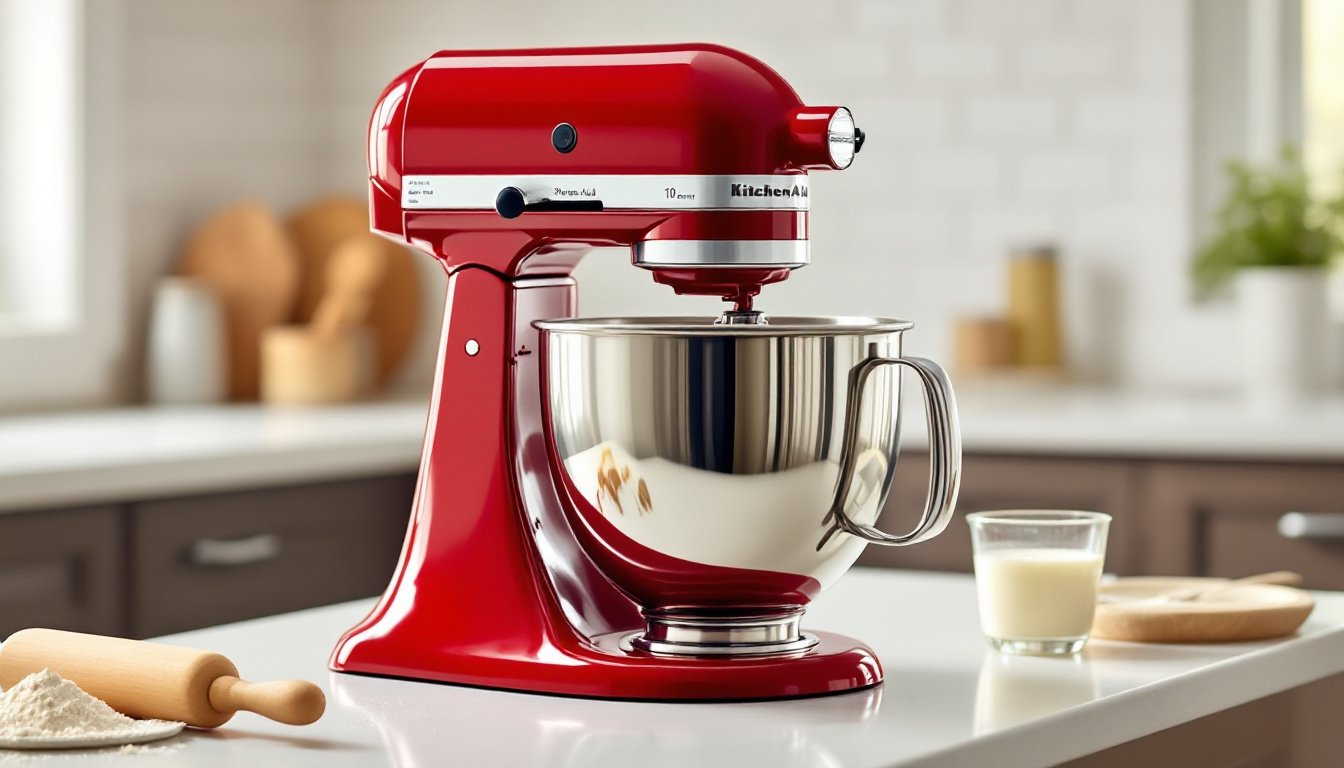
For over a century, the KitchenAid standing mixer has been the heavyweight champion of home kitchens, and for good reason. It’s the appliance that gets handed down through generations, survives decades of holiday baking marathons, and still looks sharp on the countertop. Whether someone’s kneading pizza dough, whipping meringue, or mixing cookie batter, this machine does the heavy lifting. But with multiple models, dozens of attachments, and a price tag that makes people pause, choosing the right one requires more than picking a color. This guide walks through what makes these mixers worth the investment, which model fits different needs, and how to keep one running long enough to leave it in a will.
Table of Contents
ToggleKey Takeaways
- The KitchenAid standing mixer combines durable die-cast metal construction with planetary mixing action to deliver consistent, long-lasting performance that often spans decades.
- Choose the Artisan Series for most home bakers as the ideal balance of power, capacity, and price, while the Classic suits light baking and the Professional fits serious bakers with heavy use demands.
- Optional attachments like the flex edge beater and pasta roller expand your KitchenAid standing mixer’s versatility, but prioritize ones you’ll actually use to avoid cluttering storage.
- Regular maintenance—hand-washing components, wiping the motor housing, and checking beater clearance annually—keeps your mixer running efficiently for 20-30 years.
- The 325-watt Artisan motor handles most home baking tasks without overheating, while higher-wattage models are necessary only for frequent heavy bread dough mixing or large-batch production.
Why the KitchenAid Standing Mixer Remains a Kitchen Icon
The KitchenAid standing mixer isn’t just another appliance, it’s a workhorse that’s earned its reputation through decades of consistent performance. The die-cast metal construction and all-metal gears (in most models) handle everything from dense bread dough to delicate whipped cream without burning out motors or rattling apart.
Unlike lighter plastic-gear competitors that fail after a few years, KitchenAid mixers use a direct-drive transmission that transfers power efficiently from motor to attachment hub. The tilt-head design on most home models makes bowl access easy, while the planetary mixing action, where the beater rotates around the bowl while spinning on its own axis, ensures thorough ingredient incorporation without manual scraping.
The power hub on the front accepts over 15 different attachments, turning the mixer into a pasta roller, meat grinder, or spiralizer. That versatility keeps it relevant long after the initial purchase. And yes, the color options matter, when something sits on the counter permanently, it might as well look good. But underneath that glossy enamel finish is engineering that prioritizes longevity over planned obsolescence.
Key Features That Set KitchenAid Standing Mixers Apart
The 10-speed slide control gives precise control over mixing speeds, from a slow stir (Speed 1) that won’t spray flour across the kitchen to a fast whip (Speed 10) that builds stiff peaks in egg whites. Most recipes call for speeds between 2 and 6, but having the full range matters when working with delicate batters or heavy dough.
Bowl capacity varies by model, but the standard 5-quart stainless steel bowl handles most home baking tasks, a double batch of cookies, a loaf of bread, or a full cake recipe. Larger 6-quart and 7-quart bowls suit serious bakers or anyone who regularly makes large batches. The bowls feature a comfortable handle and pour spout, and most models include a locking mechanism that prevents the bowl from spinning during heavy mixing.
The 59-point planetary mixing action ensures the flat beater reaches every part of the bowl, contacting 59 points during each rotation. Many recipes tested by Good Housekeeping and other culinary labs confirm this design reduces the need for manual scraping, though it’s not foolproof, thick doughs and sticky batters still benefit from a quick scrape.
The motor wattage ranges from 250 watts in entry-level models to 575 watts in professional units. For context, 325 watts handles most home baking, while 500+ watts is necessary for dense bread dough or extended mixing sessions.
Choosing the Right KitchenAid Model for Your Home
KitchenAid’s lineup can be confusing, but it breaks down into three main categories based on power, capacity, and build quality. Price ranges from around $280 for the Classic to $600+ for Professional models, though sales and refurbished units bring costs down.
Artisan vs. Classic vs. Professional Series
The Classic Series (K45) features a 4.5-quart bowl, 250-watt motor, and 10 speeds. It handles everyday baking, cookies, cakes, muffins, but struggles with heavy bread dough or large batches. The tilt-head design and lighter weight (around 20 pounds) make it easier to move but slightly less stable during heavy mixing. It’s the entry point for casual bakers who don’t need commercial-grade power.
The Artisan Series (KSM150) is the sweet spot for most home bakers. The 5-quart bowl, 325-watt motor, and tilt-head design balance power and versatility. It mixes bread dough without overheating, whips cream without splattering, and comes in dozens of colors. At roughly 25 pounds, it’s stable on the counter but still portable. Many kitchen design enthusiasts favor this series for its aesthetic options and reliable performance.
The Professional Series (Pro 600) steps up to a 6-quart bowl, 575-watt motor, and bowl-lift design. Instead of tilting the head back, users raise and lower the bowl with a lever. This design is more stable for heavy mixing but makes adding ingredients mid-mix slightly less convenient. The extra power handles double batches and dense dough without strain. It’s overkill for someone who bakes once a month but essential for weekly bread bakers or anyone making large batches.
For most DIY kitchens, the Artisan hits the right balance of power, capacity, and price. The Classic works for light use, while the Professional suits serious bakers or large families.
Essential Attachments and Accessories Worth Investing In
Every KitchenAid mixer includes three standard attachments: a flat beater (for general mixing), a wire whip (for aeration), and a dough hook (for kneading). These handle 90% of tasks, but the power hub opens up serious versatility.
The flex edge beater features a rubber scraper along the edge, reducing the need to stop and scrape the bowl manually. It’s worth the $30-$40 for thick batters and frostings.
For pasta enthusiasts, the pasta roller and cutter set turns fresh dough into sheets, fettuccine, or spaghetti. It’s faster and more consistent than hand-rolling and pays for itself after a few uses compared to buying fresh pasta.
The food grinder attachment grinds meat for burgers, sausage, or chili. It’s not as powerful as a standalone grinder but handles occasional use without issue. Pair it with the sausage stuffer attachment for homemade links.
The spiralizer attachment creates vegetable noodles, zucchini, sweet potato, or beets, for low-carb meals. It’s more stable than handheld spiralizers and processes vegetables quickly.
Other useful attachments include the citrus juicer, ice cream maker, and grain mill. These are niche tools, so buyers should consider actual use before investing. The power hub is a major selling point, but unused attachments just take up space.
Third-party attachments exist but often use cheaper materials or looser tolerances that can damage the power hub. Stick with KitchenAid-branded attachments or well-reviewed alternatives with metal gears.
Maintenance Tips to Keep Your Mixer Running for Decades
KitchenAid mixers are built to last, but they need basic maintenance to reach that 20- or 30-year lifespan. Most issues stem from neglect, not design flaws.
Clean attachments and bowls by hand. While some are dishwasher-safe, the high heat and harsh detergents can dull finishes and warp metal over time. Warm soapy water and a soft cloth take two minutes and preserve the gear.
Wipe down the motor housing immediately after use. Flour, sugar, and batter work their way into seams and vents. A damp cloth prevents buildup that eventually gums up moving parts. Never submerge the motor housing in water, it’s an electrical appliance, not a bowl.
Check the beater-to-bowl clearance annually. Over time, the beater may drift slightly, leaving a gap that prevents proper mixing. The mixer has an adjustment screw (usually under the motor head) that fine-tunes this clearance. The beater should just miss the bowl bottom, close enough to scrape but not so close it scrapes paint or makes contact. The manual includes instructions, and Better Homes & Gardens has detailed guides for first-timers.
Lubricate the gears every few years if the mixer sees heavy use. Professional-grade models list this in the manual. Home models are sealed and don’t require regular greasing, but if the mixer starts making unusual noises or feels rough when tilting the head, it may need service. KitchenAid service centers can disassemble, clean, and re-grease units for around $100-$150, cheaper than replacement.
Store attachments properly. Metal attachments can scratch each other or corrode if stored damp. Dry them thoroughly, and use drawer dividers or the original boxes to prevent damage.
If the mixer starts smoking or the motor smells hot, shut it off immediately. Overloading the motor (usually from too much dough or running at high speed too long) can overheat it. Most models have a thermal cutoff that trips before permanent damage occurs, but repeated overheating shortens motor life. Let it cool for 30 minutes before resuming.
Replacement parts, bowls, beaters, and even motors, are available directly from KitchenAid or third-party suppliers. The modular design means most failures are repairable, not reasons to junk the whole unit.
Conclusion
A KitchenAid standing mixer is one of the few kitchen appliances that genuinely earns its counter space. It’s not the cheapest option, but the combination of durable construction, versatile attachments, and long-term reliability makes it a smart investment for anyone who bakes regularly. Choose the model that matches actual use, maintain it properly, and it’ll outlast most other appliances in the kitchen, possibly even the kitchen itself.