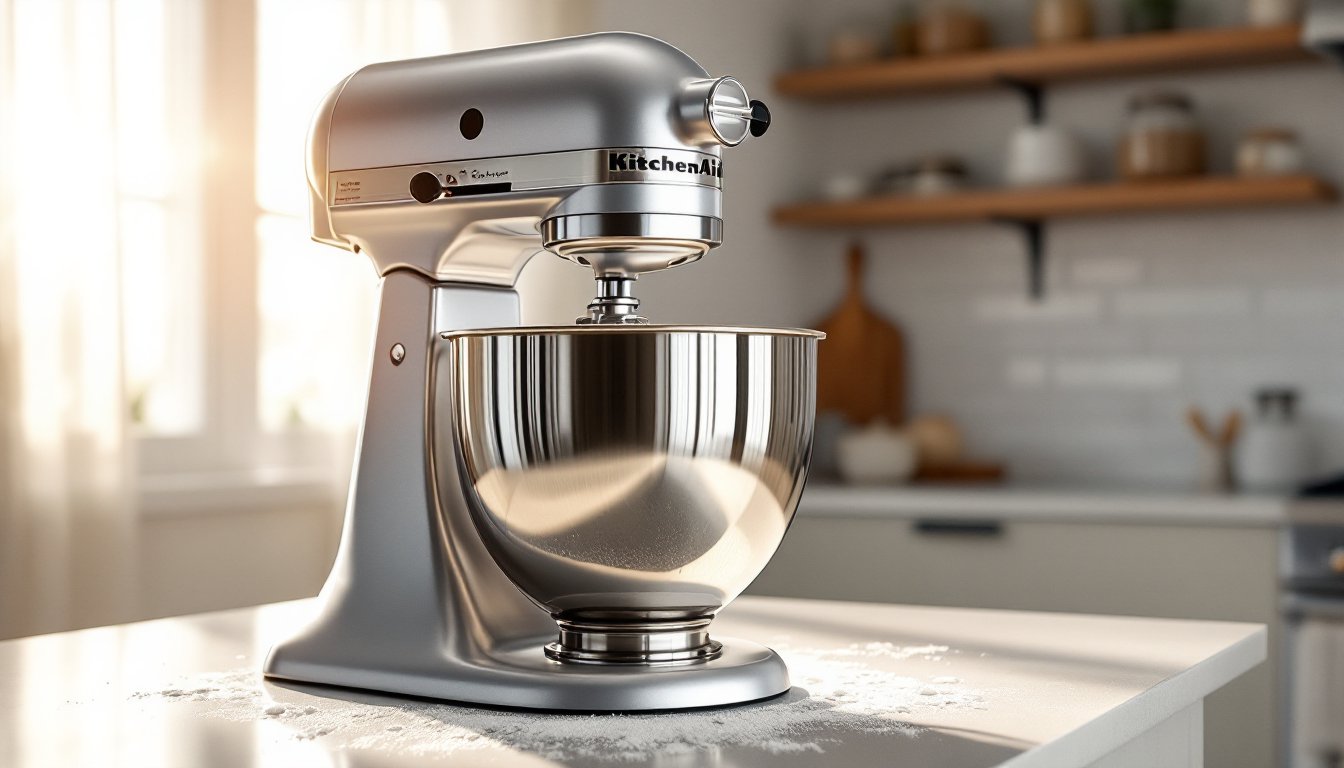
The KitchenAid 6-quart stand mixer isn’t just a larger version of the classic 5-quart model, it’s a purpose-built tool for serious bakers, caterers, and anyone who regularly tackles large batches. Whether someone’s kneading triple batches of bread dough, whipping meringue for a crowd, or mixing dense cookie dough that would stall a smaller motor, this capacity level delivers torque and bowl size that smaller mixers can’t match. Understanding what sets the 6-quart apart, and which model fits specific needs, saves money and frustration down the line.
Table of Contents
ToggleKey Takeaways
- A KitchenAid 6 qt mixer holds up to 14 cups of flour compared to 9 cups in a 5-quart model, making it essential for frequent bakers who prepare large batches without dividing recipes.
- The 575-watt motor delivers 75% more power than a 5-quart Artisan, handling dense doughs like bagels and triple batches without strain or overheating.
- Bowl-lift design on 6-quart models provides superior stability and vibration reduction compared to tilt-head mechanisms, especially critical when handling batches weighing over 5 pounds.
- The KitchenAid 6 qt mixer can produce up to 13 dozen cookies per batch and knead 4.5 pounds of bread dough simultaneously, saving significant time for frequent bakers.
- Professional and high-volume users should prioritize the 6-quart model since its gearbox is rated for continuous operation, while casual home bakers may find a 5-quart sufficient.
- A well-maintained 6-quart mixer holds strong resale value ($250-300 used) compared to smaller models, making the $400-450 initial investment partially recoverable over time.
Why the 6-Quart Capacity Makes a Difference in Your Kitchen
Bowl size matters more than most people realize. A 6-quart stainless steel bowl holds enough dough for up to 14 cups of flour, compared to 9 cups in a 5-quart model. That’s the difference between making three loaves of bread at once versus two, or a full batch of dinner rolls for a holiday meal without running the mixer twice.
The extra capacity also affects mixing efficiency. Dense mixtures like bagel dough or triple-batch cookie recipes generate significant resistance. A 6-quart mixer pairs its larger bowl with a 575-watt motor (in Professional series models), which handles thick batters without strain or overheating. Smaller mixers often require dividing recipes, which adds time and inconsistency.
For context, a standard 9×13-inch sheet cake uses about 3 cups of flour. A 6-quart mixer handles quadruple-batch cakes or dense fillings without approaching its limit. This headroom isn’t just for professionals, home bakers who prep holiday cookies, make weekly bread, or can large batches of jam benefit from not maxing out the motor every time.
The bowl-lift design (standard on most 6-quart models) also provides better stability under load than tilt-head mechanisms, reducing vibration and walk during heavy mixing cycles.
Key Features That Set the KitchenAid 6 Qt Mixer Apart
The 6-quart line includes distinct features not found in smaller consumer models. Most come with a coated flat beater, a coated dough hook, and a 6-wire whip. The coating prevents scratching the bowl and reduces clanging noise during operation. Higher-end models may include spiral dough hooks, which knead more efficiently than the older C-shaped design.
All 6-quart mixers use planetary mixing action, the attachment rotates in one direction while spinning on its own axis in the opposite direction, covering 67 touchpoints in the bowl per rotation. This ensures thorough incorporation without manual scraping as often.
Motor power ranges from 575 to 590 watts depending on the model. That’s roughly 30% more torque than a 5-quart Artisan, which runs around 325 watts. The difference shows up immediately in stiff doughs and when using attachments like the pasta roller or grain mill, which demand consistent power under load.
Bowl-Lift vs. Tilt-Head: Understanding Your Options
The 6-quart capacity is almost exclusively paired with a bowl-lift mechanism. A lever on each side of the mixer raises and lowers the bowl onto the attachment hub. This design provides better support for heavy mixtures and keeps the motor head stationary, reducing vibration.
Tilt-head models, common in 4.5- and 5-quart mixers, hinge the motor back to access the bowl. They’re easier to scrape and swap attachments, but the hinge point becomes a weak spot under heavy loads. A 6-quart bowl filled with bread dough weighs over 5 pounds, enough to stress a tilt-head hinge over time.
Bowl-lift models require slightly more clearance above the mixer (no tilting motor), but they’re more stable on the counter and handle the torque of large batches without flexing. For anyone who mixes frequently or uses power-hungry attachments, the bowl-lift design is the better long-term choice.
Choosing the Right KitchenAid 6 Qt Model for Your Needs
KitchenAid’s 6-quart lineup includes several models with different features and price points. The Professional 600 is the baseline, cast-metal construction, 575-watt motor, and the standard three attachments. It’s available in fewer colors than the Artisan line, typically sticking to silver, white, black, and red.
The Professional 6500 Design adds a glass bowl with measurement markings, a flex edge beater (which scrapes the bowl as it mixes), and more color options. The glass bowl is useful for monitoring dough development but weighs more and can crack if dropped. It’s worth the upcharge if someone values the no-scrape beater and prefers aesthetics.
The Pro Line series (model 7-qt, but sometimes confused with 6-qt models) steps up to a 1.3-horsepower motor and includes a bowl guard to prevent injury during operation. This is overkill for home use unless someone’s running the mixer multiple hours per day or using high-resistance attachments like meat grinders regularly.
All 6-quart models share the same attachment hub and accept KitchenAid’s full catalog of accessories, pasta rollers, food grinders, spiralizers, and more. When choosing a model, prioritize motor power and included attachments over color options. A flex edge beater alone costs around $30-40 separately, so models that include it offer better value if someone plans to use it.
Avoid refurbished units unless they carry a manufacturer warranty. The motor and gearbox are the most failure-prone components, and a refurb without coverage isn’t worth the modest savings.
What You Can Make with a 6-Quart Stand Mixer
A 6-quart mixer handles up to 13 dozen cookies per batch, compared to 9 dozen in a 5-quart. For holiday baking or farmers market sales, that’s the difference between two batches and three. It kneads up to 4.5 pounds of bread dough at once, enough for three standard loaves or two large boules without dividing the recipe.
Dense applications like bagel dough (which requires a stiff, low-hydration mix) or pasta dough benefit from the higher torque. The motor doesn’t labor or overheat during the 8-10 minute knead cycle these doughs require. Many home cooks interested in kitchen design ideas and appliance performance find that motor power directly affects recipe success.
Whipped cream, meringue, and buttercream frosting also improve with a 6-quart mixer. The deeper bowl reduces splatter during high-speed whipping, and the 6-wire whip incorporates more air per rotation than a 4-wire version. A Swiss meringue buttercream for a three-layer cake whips up in one batch, maintaining consistent texture throughout.
Attachments expand capability significantly. The food grinder attachment turns the mixer into a meat processor, useful for sausage making or grinding chuck for burgers. The grain mill attachment mills fresh flour from wheat berries, which works well for anyone baking sourdough or sprouted grain breads. These attachments draw significant power, so the 575-watt motor in a 6-quart model handles them without bogging down the way a 325-watt Artisan might.
Thick batters like carrot cake or banana bread with add-ins (nuts, chocolate chips) mix more evenly in a 6-quart bowl. The extra headroom prevents flour from dusting over the rim during initial incorporation, and the motor powers through without stalling when folding in heavy ingredients.
Setup and Maintenance Tips for Long-Lasting Performance
Out of the box, the mixer needs minimal setup. Attach the bowl by sliding it onto the pins and turning clockwise until it locks. Lower the bowl-lift lever, then slide the desired attachment onto the hub and turn clockwise to secure. The height adjustment screw (located under the motor head) sets the clearance between the beater and bowl bottom. It should just clear the bowl surface, if it scrapes, turn the screw clockwise a quarter turn: if it’s too high, turn counterclockwise.
Run the mixer empty for 30 seconds on speed 2 before first use to seat the gears. Some units ship with excess grease in the gearbox, which can smell during initial operation. This is normal and dissipates after a few uses.
Cleaning is straightforward but not dishwasher-friendly for all parts. The bowl, beater, whip, and dough hook are dishwasher-safe, but hand-washing extends their lifespan (especially coated versions). Wipe the motor head and bowl-lift mechanism with a damp cloth, never submerge electrical components. Grease and flour can accumulate in the bowl-lift collar: clean it monthly with a brush to prevent sticking.
The motor is sealed and doesn’t require lubrication, but the gearbox may need servicing every 5-10 years depending on use. If the mixer develops a grinding noise or the attachments slip during operation, it’s time for a professional service. KitchenAid-authorized service centers can rebuild the gearbox for $100-150, which beats replacing a $400 mixer.
Storage matters for longevity. Keep the mixer on the counter if space allows, repeated lifting and moving can stress the motor mounts. If storing in a cabinet, use both hands to lift from the base, not the motor head. Cover it with a towel or mixer cover to prevent dust buildup in the vents.
Always start mixing on speed 1 for dry ingredients to prevent flour clouds, then increase speed gradually. Running a cold motor at high speed under load can strain the gears. Let the mixer warm up for 15-20 seconds on low speed before tackling stiff doughs.
Is the KitchenAid 6 Qt Mixer Worth the Investment?
A 6-quart Professional 600 retails between $400-450, compared to $280-330 for a 5-quart Artisan. That $120-150 difference buys 20% more capacity, 75% more motor power, and a more durable bowl-lift mechanism. For someone who bakes weekly or uses the mixer for large batches, the investment pays off in reduced mixing time and fewer motor replacements.
The break-even point depends on usage. Casual bakers who make a batch of cookies monthly won’t see much benefit over a 5-quart model. But anyone who bakes bread twice a week, preps large holiday batches, or uses power-intensive attachments will outgrow a smaller mixer quickly. Replacing a burned-out 5-quart motor after three years costs nearly as much as buying the 6-quart upfront.
Resale value also matters. KitchenAid mixers hold value better than most small appliances. A well-maintained 6-quart Professional sells for $250-300 used, compared to $150-180 for a used 5-quart. The higher initial cost is partially recoverable if someone upgrades or downsizes later. Many home decorating ideas and renovation projects benefit from durable, long-lasting appliances that maintain their value.
The mixer’s warranty is one year for home use, which is standard but not exceptional. Extended warranties through retailers add $50-80 but rarely cover normal wear like beater replacement or cosmetic damage. Instead, invest that money in quality attachments or a second bowl for back-to-back batches.
For professional or high-volume use (bake sales, catering, meal prep businesses), the 6-quart is a baseline requirement. The motor and gearbox are rated for continuous operation, unlike smaller models designed for intermittent home use. Anyone running the mixer more than an hour per day should consider it a business tool, not a luxury.