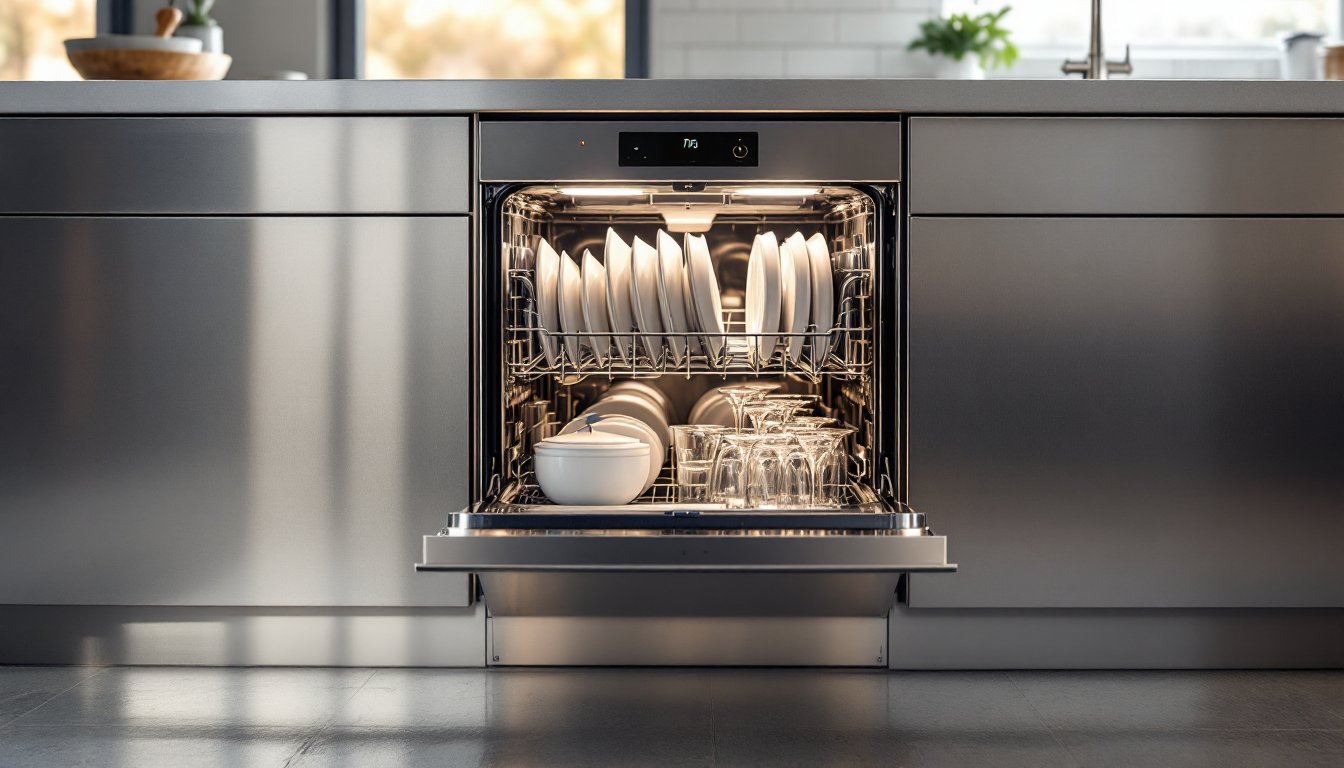
If you’ve ever worked in a restaurant kitchen or talked to someone who has, you’ve probably heard about Jackson dishwashers. These commercial workhorses are built to handle hundreds of dish cycles per day without breaking a sweat. But here’s the thing: a growing number of homeowners are installing Jackson units in their homes, especially in larger households or home kitchens that see heavy use. This guide walks through everything you need to know about Jackson dishwashers, what sets them apart, how to install one, and how to keep it running for decades.
Table of Contents
ToggleKey Takeaways
- Jackson dishwashers are commercial-grade machines that complete a full rack in 60–90 seconds using high-temperature sanitization at 180°F, making them ideal for large households and frequent entertainers.
- Unlike residential dishwashers, Jackson units feature stainless steel construction throughout and are designed for repair and longevity, with readily available parts lasting 20+ years with proper maintenance.
- Installation requires dedicated electrical (120V for low-temp models, 208–240V for high-temp models) and hot water supply lines capable of delivering 140°F+ inlet water, with high-temp models needing professional electrical work.
- Daily maintenance includes removing the scrap screen, weekly deliming and spray arm cleaning, and monthly inspection of gaskets and water temperature to keep your Jackson dishwasher operating efficiently.
- A Jackson dishwasher is most practical for large families, serious home cooks, and homes with heavy kitchen use, as the investment and space requirements make it unnecessary for low-volume dishwashing households.
What Is a Jackson Dishwasher?
Jackson is a commercial dishwasher manufacturer that’s been around since 1952, specializing in high-capacity, high-temp machines used in restaurants, hospitals, and institutional kitchens. Unlike residential dishwashers from brands like Bosch or KitchenAid, Jackson units are engineered for speed and sanitation.
Most Jackson dishwashers are high-temperature sanitizing machines, meaning they use water heated to 180°F or higher during the final rinse to kill bacteria without relying solely on chemical sanitizers. Cycle times are short, typically 60 to 90 seconds per rack, compared to the 2- to 3-hour cycles of standard home dishwashers.
These machines are built with stainless steel construction throughout, heavy-duty pumps, and components designed for continuous operation. They’re louder, larger, and more utilitarian than consumer models, but they deliver restaurant-level cleanliness and durability that can last 20+ years with proper maintenance.
Jackson dishwashers come in several formats: undercounter models (similar in footprint to home dishwashers), door-type machines (upright units with a lift door), and conveyor models (for very high-volume operations). For residential use, undercounter models are the most practical option.
Key Features and Benefits of Jackson Dishwashers
High-Temperature Sanitization
Jackson dishwashers use a final rinse at 180°F, which meets NSF/ANSI Standard 3 for commercial warewashing equipment. This level of heat sanitization is more effective than the typical 140–160°F wash temperatures in home dishwashers.
Speed and Capacity
A Jackson undercounter model completes a full rack in about 90 seconds. If you’re washing dishes for a large family, hosting frequently, or running a small catering business from home, this speed is a game-changer. You can cycle through 40 racks per hour, compared to maybe 8–10 loads per day with a standard home unit.
Durability and Serviceability
Commercial machines are designed to be repaired, not replaced. Jackson uses standard pumps, heating elements, and gaskets that are widely available. There’s no proprietary control board that costs $600 to replace. Most parts are accessible with basic hand tools.
Stainless Steel Construction
Everything from the tank to the spray arms is 304 stainless steel. There’s no plastic tub that cracks after five years or coated racks that rust. This is the same material used in commercial kitchens where machines run 12 hours a day.
No Pre-Rinsing Required
Jackson machines have powerful wash pumps and efficient spray patterns. Scrape the plates, load them, and run the cycle. The high heat and pressure handle the rest, though heavily baked-on food should still be soaked or scraped off.
Trade-Offs
These machines are louder than home dishwashers, expect 65–75 dBA during operation. They also require dedicated electrical (often 208V or 240V single-phase) and hot water supply lines capable of delivering 140°F+ inlet water. Installation isn’t plug-and-play.
Popular Jackson Dishwasher Models for Home Use
Jackson Avenger LT
This is the most common undercounter model adapted for residential use. It’s a low-temperature chemical sanitizing machine, which means it uses a sanitizing rinse agent instead of high-temp water. This model runs on 115V electrical and doesn’t require a booster heater, making it easier to install in homes.
Cycle time is about 2 minutes. It’s quieter than high-temp models and uses less energy, but you’ll need to purchase commercial sanitizing solution (typically chlorine- or quat-based) and maintain proper concentrations. Many kitchens featured on design sites showcase undercounter commercial units for their clean, professional aesthetic.
Jackson Dishstar LT
Similar to the Avenger but with a digital control panel and slightly faster cycle times. It’s a solid choice if you want programmable cycles and built-in diagnostics. The Dishstar LT also runs on 115V and uses chemical sanitizing.
Jackson Tempstar High-Temp
This is a high-temperature model that requires 208V or 240V electrical and a booster heater to reach 180°F final rinse temps. It’s heavier-duty than the LT models and doesn’t require chemical sanitizers. If you have the electrical capacity and want true commercial sanitation, this is the unit to consider. Appliance testing sites often note that commercial machines outperform residential units on sanitation and speed.
Dimensions and Fit
Most Jackson undercounter models are roughly 24 inches wide, 24 inches deep, and 33–34 inches tall. That’s similar to a standard home dishwasher in width, but taller and deeper. Check your cabinet and countertop clearances before ordering.
Installation and Setup Guide
Electrical Requirements
Low-temp models (Avenger LT, Dishstar LT) run on 120V, 15A circuits. You can plug them into a standard outlet, but it’s best to put them on a dedicated circuit to avoid tripping breakers.
High-temp models require 208V or 240V single-phase power and a 30–50A breaker, depending on the model. You’ll need to hire a licensed electrician to run a new circuit from your panel. This is not a DIY job unless you’re a qualified electrician. Most jurisdictions require permits for new 240V circuits.
Plumbing Connections
Jackson dishwashers use 3/4-inch NPT hot water inlet connections and require 20–25 psi water pressure. Inlet water should be 140°F minimum for best results (high-temp models boost this further with internal heaters).
You’ll need to install a dedicated hot water supply line from your water heater or a nearby fixture. Use braided stainless steel supply lines rated for high temp.
Drain connections are typically 1-inch ID and gravity-fed. The drain hose must have a high loop or air gap to prevent backflow, per most local plumbing codes. Drain into a standpipe, floor sink, or under-sink tailpiece with a proper trap.
Ventilation and Space
These machines vent steam during the rinse cycle. Install them in a space with good ventilation, under a range hood is ideal. Leave at least 2 inches of clearance on the sides and back for airflow and service access.
Water Hardness and Filtration
If you have hard water (over 7 grains per gallon), install an inline water softener or descaling system. Scale buildup will clog spray nozzles and reduce heater efficiency. Many kitchen remodeling resources recommend water softeners for any high-performance appliance.
Safety Gear
Wear safety goggles and work gloves when making plumbing connections. Use pipe thread sealant (not Teflon tape alone) on NPT fittings to prevent leaks.
Maintenance Tips to Keep Your Jackson Dishwasher Running
Daily Tasks
- Remove and clean the scrap screen at the bottom of the wash tank. This catches food debris and prevents pump clogs.
- Wipe down door gaskets with a damp cloth to prevent buildup that can compromise the seal.
- Check the spray arms for clogs. Pull them out and rinse under hot water if you notice reduced spray pressure.
Weekly Maintenance
- Delime the wash tank and booster heater (high-temp models) using a commercial deliming solution. Follow the manufacturer’s instructions, typically, you’ll fill the tank with diluted delimer, run a cycle, then drain and rinse.
- Inspect and clean the wash and rinse arm nozzles. Use a toothpick or small wire to clear any mineral deposits.
- Check sanitizer levels (low-temp models). Refill the dispenser and verify the concentration with test strips.
Monthly Tasks
- Inspect door gaskets and hinges for wear. Replace gaskets if they’re cracked or no longer sealing properly. Gaskets are inexpensive and easy to swap.
- Clean or replace the inlet water filter screen. This is usually located where the water line connects to the machine.
- Test the water temperature at the final rinse. Use a probe thermometer (high-temp models should hit 180°F: low-temp models around 120°F).
Annual Professional Service
Have a commercial kitchen equipment technician inspect the machine annually. They’ll check the pumps, heating elements, timers, and electrical connections. Budget around $150–$250 for a service call, depending on your region.
Parts and Longevity
Jackson machines are built to last 20+ years. Common wear items include door gaskets ($20–$40), spray arms ($50–$100), and heating elements ($100–$200). Keep a basic service manual on hand, Jackson provides these free on their website.
Troubleshooting Common Jackson Dishwasher Issues
Machine Won’t Start
Check the door latch, commercial dishwashers have safety interlocks that prevent operation if the door isn’t fully closed. Inspect the door strike and latch for debris or misalignment. Also verify that the circuit breaker hasn’t tripped and the machine is receiving power.
Poor Cleaning Results
Nine times out of ten, this is a water temperature or pressure issue. Use a thermometer to confirm inlet water temp is at least 140°F. Check water pressure at the inlet (should be 20–25 psi). Clean the spray arm nozzles and scrap screen. If you’re using a low-temp model, verify sanitizer concentration with test strips.
Not Reaching Temperature (High-Temp Models)
This usually points to a failed heating element or faulty high-limit thermostat. Test the element with a multimeter (should read 10–30 ohms depending on the model). If the element is good, check the thermostat and associated wiring. This repair typically requires a technician unless you’re comfortable working with 240V systems.
Excessive Noise or Vibration
Check for debris in the wash pump impeller. Also inspect the mounting feet, commercial dishwashers must be level and stable. Adjust the leveling legs as needed. If the noise is a grinding or rattling sound, the pump bearings may be worn and need replacement.
Water Leaks
Inspect door gaskets first, these are the most common leak points. Also check the drain hose connections and tank seams. If water is leaking from the pump area, the pump seal may need replacement. Always turn off power and water before investigating leaks.
E-Code or Fault Messages (Digital Models)
Refer to the service manual for your specific model. Most error codes relate to temperature sensors, door switches, or pump issues. Jackson’s tech support line is helpful, keep your model and serial number handy when you call.
Conclusion
A Jackson dishwasher isn’t for everyone, it’s overkill if you’re washing dishes for two people once a day. But for large families, serious home cooks, or anyone who values speed and sanitation over quiet operation, it’s a durable, repairable appliance that can outlast three generations of home dishwashers. Plan your installation carefully, keep up with maintenance, and you’ll have a machine that works as hard as you do.