When a Kenmore Elite dishwasher starts acting up, leaving dishes dirty, leaking onto the floor, or refusing to latch, the problem often boils down to a single worn-out part. The good news? Most components are replaceable without calling a technician or buying a new unit. Whether it’s a cracked spray arm, a failing door gasket, or a clogged pump assembly, tracking down the right part and installing it yourself can save hundreds of dollars and extend the life of the machine. This guide walks through identifying model-specific parts, sourcing quality replacements, and tackling common repairs with confidence.
Table of Contents
ToggleKey Takeaways
- Always locate your Kenmore Elite dishwasher’s model number before purchasing Kenmore Elite dishwasher parts, as components vary across models and manufacturers like Whirlpool, Electrolux, and BSH.
- The most frequently replaced parts—spray arms ($15–$40), door gaskets ($20–$50), and latch assemblies ($25–$70)—are DIY-friendly and can save hundreds of dollars compared to professional repair calls.
- Start troubleshooting with simple fixes like cleaning the filter, clearing spray arm nozzles, and resetting the control board before investing in replacement parts.
- Shop for OEM parts through reputable retailers like Sears Parts Direct, RepairClinic, or AppliancePartsPros to ensure compatibility and avoid premature failures from aftermarket alternatives.
- Most interior Kenmore Elite dishwasher part replacements require only basic hand tools and take under 30 minutes; always disconnect power and water supply before starting any repair.
- Listen for diagnostic sounds—grinding indicates a broken impeller, humming with no water spray suggests a seized pump—to accurately identify which part needs replacement.
Understanding Your Kenmore Elite Dishwasher Model and Parts
Before ordering any replacement part, locate the model number and serial number on the dishwasher. On most Kenmore Elite units, the identification label sits along the top edge of the door frame or on the left or right side panel inside the tub. The model number typically starts with a three-digit prefix (like 665) followed by additional digits that specify the exact configuration.
This number matters because Kenmore Elite dishwashers span multiple generations and manufacturers. Kenmore appliances are produced by various OEMs, many Elite dishwashers were made by Whirlpool, while others came from Electrolux or BSH Home Appliances. Parts are not always interchangeable across models, even within the Elite line. A spray arm designed for a 665.13242K600 won’t necessarily fit a 665.12773K310.
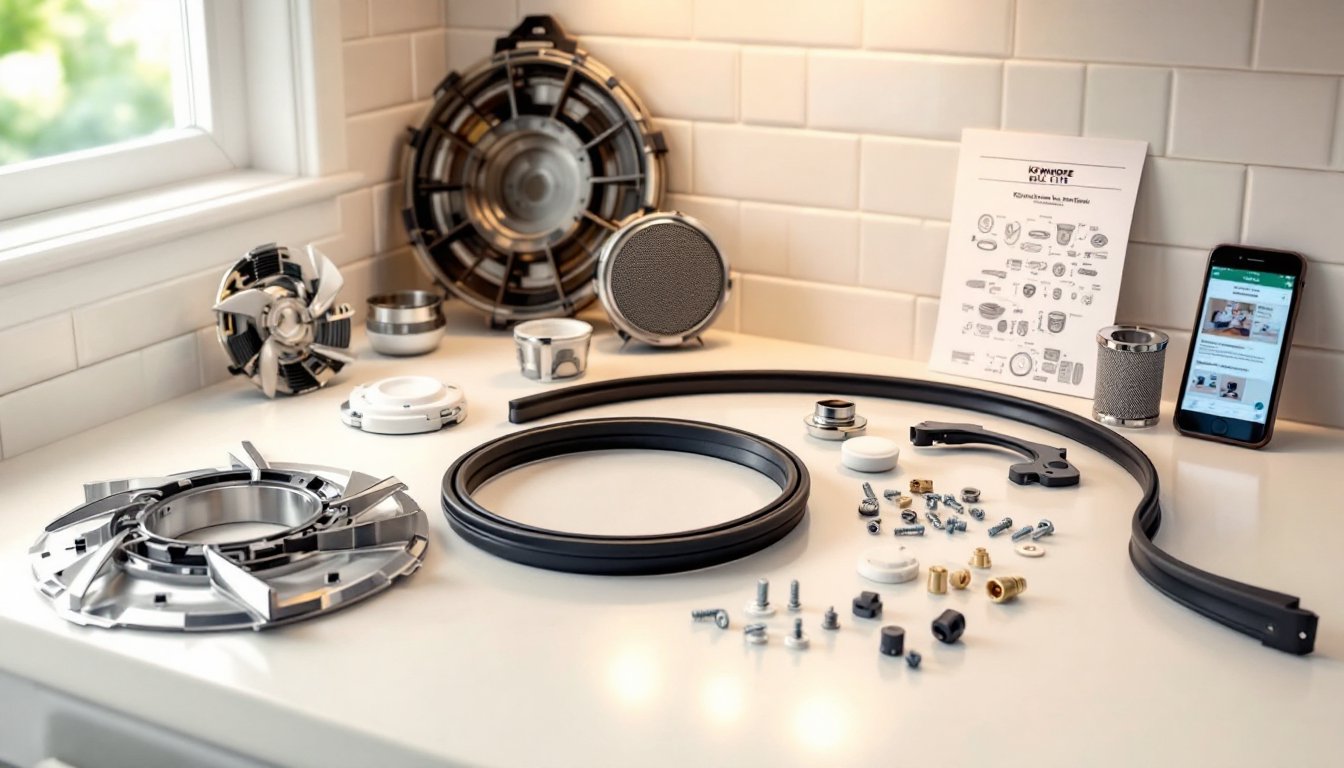
Once you have the model number, cross-reference it with the part diagram in the owner’s manual or on parts supplier websites. These exploded-view diagrams show every component with a corresponding part number. Write down both the part number and the model number before shopping, it eliminates guesswork and returns.
If the label is faded or missing, check the original purchase paperwork or search by features (control panel layout, number of wash cycles, stainless vs. plastic tub). Some online parts retailers offer lookup tools that filter by brand, series, and visible characteristics, though this method is less precise.
Most Commonly Replaced Kenmore Elite Dishwasher Parts
Certain components wear out faster than others due to heat, water pressure, and detergent exposure. Knowing which parts fail most often helps prioritize troubleshooting and keeps a repair from turning into a wild parts chase.
Spray Arms and Wash System Components
The upper and lower spray arms take a beating. Hard water deposits clog the spray nozzles, reducing water pressure and leaving dishes filmy. Plastic arms can crack from impact with tall pots or stress fractures near the mounting hub. If dishes aren’t getting clean or water pools in the bottom of the tub, inspect the spray arms first.
Replacement spray arms typically cost $15–$40 depending on the model. When shopping, verify the diameter and number of spray nozzles, some Elite models use a 13-inch lower arm with six nozzles, others use a 14-inch version with eight. The mounting hub style also varies (snap-on vs. threaded).
The wash impeller (also called the chopper blade or food disposer blade) sits below the lower spray arm and grinds food particles before they reach the drain pump. If the dishwasher sounds louder than usual or dishes come out with food debris, the impeller may be damaged or jammed. This part is accessible from inside the tub by removing the spray arm and filter assembly.
Another frequent culprit is the circulation pump and motor assembly. This is a bigger repair, expect to spend $100–$200 for the part and plan for a more involved installation. If the dishwasher fills with water but doesn’t spray, the pump may have failed. Listen for a humming sound during the wash cycle: a running motor with no water movement points to a seized or broken pump.
Door Latches, Gaskets, and Seals
A leaking Kenmore Elite dishwasher often traces back to a compromised door gasket (sometimes called a door seal or tub gasket). This flexible rubber or vinyl strip runs along the perimeter of the door or tub opening, creating a watertight seal when the door closes. Over time, detergent residue, high heat, and repeated compression cause the gasket to crack, shrink, or lose its shape.
Inspect the gasket for tears, stiffness, or visible gaps when the door is closed. Replacement gaskets cost $20–$50 and install without tools on most models, just peel off the old gasket and press the new one into the channel. Some gaskets are held in place by a retaining strip or clips: consult the parts diagram to confirm the attachment method.
The door latch assembly is another common failure point. If the door won’t stay closed, won’t lock, or the control panel doesn’t start the cycle, the latch mechanism or strike plate may be worn or broken. Latch assemblies range from $25–$70 and typically require removing the inner door panel to access mounting screws. This is a straightforward repair for anyone comfortable with a screwdriver and a few snap-off clips.
Door hinges and springs can weaken over years of use, causing the door to drop too quickly or not stay open at a 45-degree angle for loading. Replacement hinge kits ($15–$40) come with new springs and mounting hardware. Adjusting or replacing these parts involves supporting the door weight while swapping components, recruit a helper or use a padded surface to rest the door.
Where to Buy Genuine and Compatible Kenmore Elite Parts
Kenmore parts are widely available, but not all sources offer the same quality, price, or return policies. Start with Sears Parts Direct (now part of Transform SR Brands), which stocks OEM (original equipment manufacturer) parts and maintains detailed model-specific diagrams. Prices run higher than third-party suppliers, but the parts match factory specs.
RepairClinic and AppliancePartsPros are reliable online retailers with extensive Kenmore inventories, user-uploaded installation videos, and part compatibility checkers. Both offer OEM and aftermarket options. Aftermarket parts can be hit-or-miss, some match OEM quality at a lower price, others fail prematurely. Read reviews and check return windows before buying off-brand components.
For same-day needs, many homeowners explore home appliance repairs and maintenance guides to identify whether a part is available locally. Local appliance parts stores often stock high-turnover items like door gaskets, spray arms, and filters. Bring the model number and old part if possible: counter staff can cross-reference and confirm fit before purchase.
Amazon and eBay list Kenmore parts, but verify the seller’s return policy and part authenticity. Look for listings with the exact part number rather than vague compatibility claims. “Fits Kenmore Elite” isn’t specific enough, confirm it fits your model.
Avoid universal or generic parts for critical components like pumps, motors, or control boards. These parts have tight tolerances and electrical specifications: a mismatch can cause further damage or void any remaining warranty coverage.
How to Install Kenmore Elite Dishwasher Parts Yourself
Most Kenmore Elite parts are DIY-friendly with basic hand tools: a Phillips screwdriver, nut driver set (1/4-inch and 5/16-inch are common), needle-nose pliers, and a flashlight. Some repairs require a Torx driver for control panel screws, check the part diagram if unsure.
Before starting any repair, disconnect power at the circuit breaker and turn off the water supply at the shutoff valve under the sink. Even simple part swaps can result in accidental water release or exposed wiring. Wear safety glasses when working under the dishwasher or inside the tub to protect against dripping water and sharp edges.
Accessing interior parts (spray arms, filters, impellers) is straightforward. Open the door, remove the lower dish rack, and unscrew or unclip the components. The step-by-step process for replacing dishwasher parts typically involves minimal disassembly and takes under 30 minutes once you have the correct replacement in hand.
Removing the lower access panel (also called the kick plate) exposes the drain pump, fill valve, and motor. This panel is held by a few screws or clips along the bottom front edge. Lay a towel on the floor before loosening any hoses or connections, residual water will spill out. Use a shallow pan or shop vacuum to catch drainage.
Inner door panel removal is necessary for latch, control board, or door spring replacement. Remove the screws around the perimeter of the inner door (usually along the top and sides). The panel will hinge open, revealing wiring harnesses and mounting brackets. Take a photo of wire connections before disconnecting anything, it simplifies reassembly.
When installing a new gasket, start at the top center and work around the perimeter, pressing firmly into the channel. Avoid stretching the gasket: if it’s too long or too short, double-check the part number. A misaligned gasket will leak.
After completing the repair, reconnect power and water, then run a short rinse cycle without dishes. Watch for leaks around replaced seals or connections. If water appears, turn off the unit immediately and recheck the installation.
Troubleshooting Tips Before Ordering Replacement Parts
Not every dishwasher problem requires a new part. A few minutes of troubleshooting can save unnecessary spending and identify simple fixes.
Check the filter and spray arm nozzles first. Food debris and mineral buildup are responsible for a surprising number of performance complaints. Remove the cylindrical filter assembly at the bottom of the tub, rinse it under hot water, and scrub with a soft brush. Use a toothpick or straightened paperclip to clear clogged spray nozzles.
Reset the control board. If the dishwasher won’t start, displays an error code, or behaves erratically, try a hard reset. Turn off the circuit breaker for 5 minutes, then restore power. This clears temporary glitches in the electronic control. Consult the owner’s manual for model-specific error code meanings, some codes indicate sensor issues rather than mechanical failure.
Inspect the door latch and strike alignment. A door that won’t latch might just need adjustment. Loosen the strike plate screws slightly, close the door, and tighten while holding the door in the latched position. This realigns the strike with the latch mechanism.
Test the float switch. If the dishwasher overfills or won’t fill, the float assembly (a small plastic dome on the tub floor) may be stuck. Lift it up and down to ensure free movement. If it’s sticky, clean around the base and check for debris.
Listen for diagnostic clues. A grinding noise during the wash cycle often means a broken wash impeller or something caught in the chopper assembly. A humming sound with no water spray suggests a seized pump. No sound at all points to electrical issues, check the door latch switch and control board connections before replacing expensive components.
For persistent issues that don’t respond to these checks, the problem may involve the main control board ($150–$300) or electronic touchpad ($80–$150). These repairs are more complex and may warrant a service call, especially if the dishwasher is still under warranty or a home protection plan. Some manufacturers will cover parts and labor for defects within a certain time frame, even on models purchased secondhand.