Ivy isn’t just for brick walls and garden trellises anymore. These versatile climbers have earned their spot as one of the most adaptable houseplants around, thriving in conditions that would make other plants sulk. Whether someone’s working with a bright kitchen window or a dim bathroom corner, there’s likely an ivy variety that’ll work. They’re forgiving, fast-growing, and surprisingly tolerant of neglect, but they’re not indestructible. Knowing the basics of light, water, and pest management makes the difference between scraggly stems and cascading greenery that actually looks intentional.
Table of Contents
ToggleKey Takeaways
- Indoor ivy plants naturally purify air by removing formaldehyde, benzene, and mold spores, making them ideal for bedrooms and bathrooms with poor ventilation.
- Proper watering is critical for indoor ivy plants—water only when the top inch of soil feels dry to prevent root rot, the leading cause of plant failure.
- Ivy thrives in bright, indirect light but tolerates medium to low light, though variegated varieties need more light to maintain their distinctive white or yellow markings.
- Increase humidity above 40% by grouping plants together, setting pots on pebble trays, or using a humidifier to prevent spider mites and keep foliage healthy.
- Ivy propagates easily from stem cuttings placed in water, providing a cost-effective way to fill multiple pots or share plants with others.
- English ivy is toxic to pets and children if ingested, so keep trailing vines out of reach and wear gloves when handling sensitive skin.
Why Indoor Ivy Plants Are Perfect for Your Home
Ivy plants earn their keep in ways most houseplants can’t match. They’re natural air scrubbers, pulling formaldehyde, benzene, and other volatile organic compounds (VOCs) out of the air, compounds that off-gas from paint, particleboard, and upholstery. A NASA Clean Air Study from the late ’80s identified English ivy as one of the top performers for removing airborne mold spores, which makes it a smart choice for basements or bathrooms with poor ventilation.
Beyond air quality, ivy grows fast. Under decent conditions, vines can add several inches per month, filling in gaps on shelves, climbing moss poles, or draping over macramé hangers. That speed means quick gratification for impatient DIYers.
They’re also low-maintenance enough for renters. No need for complex fertilizing schedules or grow lights. Most varieties tolerate medium to low light and bounce back from underwatering better than overwatering. For someone juggling projects, that resilience is worth its weight in potting mix.
Finally, ivy propagates easily. Snip a stem below a node, stick it in water, and roots appear in a week or two. It’s the houseplant equivalent of free material, perfect for filling more pots or sharing with neighbors.
Popular Indoor Ivy Varieties to Grow
Not all ivy is created equal. Here are the varieties that perform best indoors:
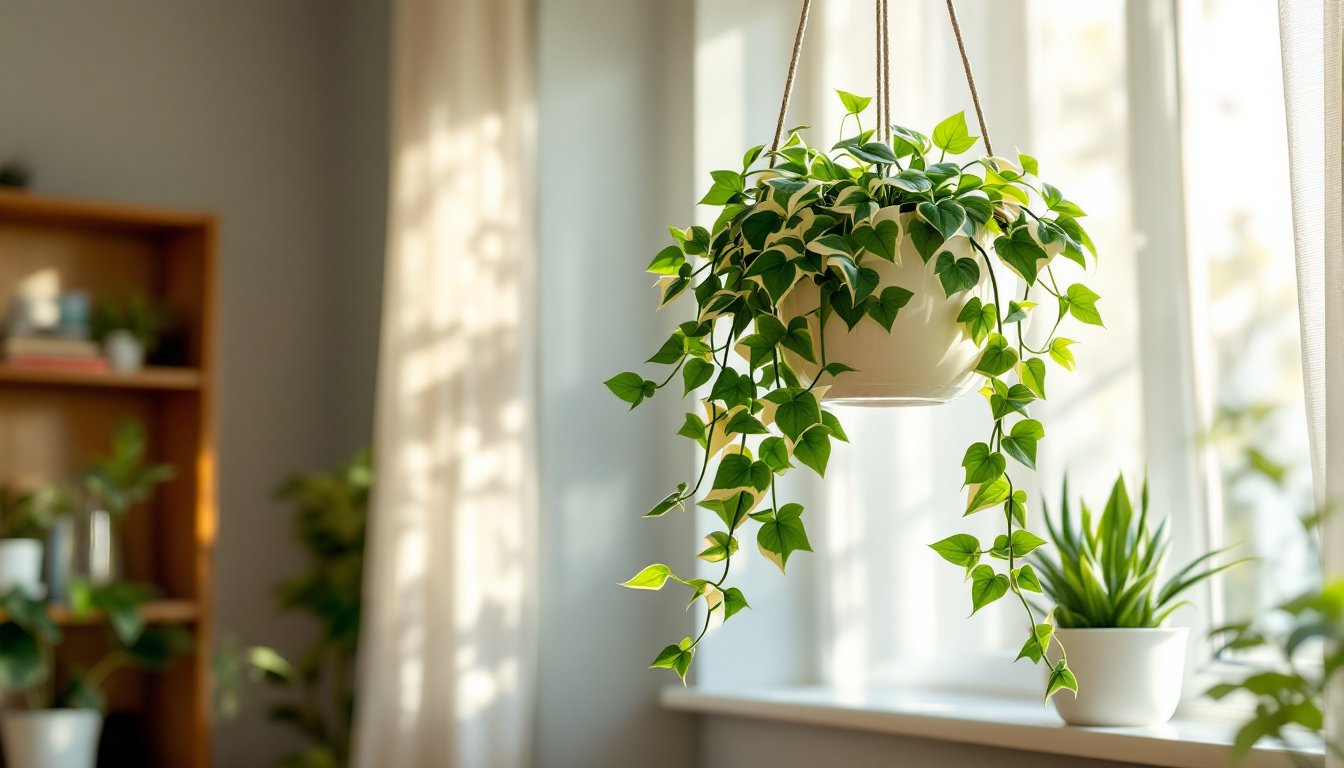
English Ivy (Hedera helix): The classic. Deep green leaves, sometimes variegated with white or yellow edges. Tolerates low light better than most and adapts to a range of humidity levels. Varieties like ‘Needlepoint’ have narrow, delicate leaves, while ‘Glacier’ shows creamy white margins. A Hedera ivy hanging basket showcases its trailing habit beautifully.
Algerian Ivy (Hedera algeriensis): Larger leaves, up to 6 inches across, with a glossy finish. It’s more heat-tolerant than English ivy, which helps in homes without air conditioning. ‘Gloire de Marengo’ is a popular variegated cultivar with gray-green leaves edged in cream.
Irish Ivy (Hedera hibernica): Often confused with English ivy, but the leaves are broader and darker. It’s hardier outdoors (USDA zones 5–9) but grows just fine in pots indoors. Good choice if someone wants a fuller, bushier plant rather than long trailing vines.
Swedish Ivy (Plectranthus verticillatus): Not a true ivy, it’s in the mint family, but commonly called one. Rounded, scalloped leaves and a trailing habit. More tolerant of dry air than Hedera species, so it’s a solid pick for homes with forced-air heating.
Devil’s Ivy (Epipremnum aureum): Also called pothos. Technically not ivy either, but grouped with them in most garden centers. Heart-shaped leaves, ridiculously easy to grow, and nearly unkillable. If someone’s new to houseplants, start here.
When selecting ivy, check for pests before bringing it home. Look under leaves for webbing (spider mites), sticky residue (aphids), or tiny white fluff (mealybugs). A clean plant saves headaches later.
How to Care for Indoor Ivy Plants
Ivy care boils down to getting three things right: light, water, and humidity. Nail those, and the plant handles the rest.
Light and Water Requirements
Light: Ivy prefers bright, indirect light but tolerates medium to low light. Near an east- or north-facing window works well. Variegated varieties (those with white or yellow markings) need more light to maintain their patterns, low light causes them to revert to solid green. If the vines stretch out with long gaps between leaves (etiolation), move the plant closer to a window or add a supplemental grow light. A simple LED shop light on a timer does the job.
Water: Ivy likes consistent moisture but hates wet feet. Water when the top inch of soil feels dry, stick a finger in to check. In a typical 6-inch pot, that’s usually every 5–7 days in summer, less in winter. Overwatering is the #1 killer. If the potting mix stays soggy, roots rot and the plant collapses fast.
Use a pot with drainage holes. If someone’s using a decorative cachepot without drainage, either drill a hole (a 1/4-inch masonry bit works on ceramic) or double-pot: keep the ivy in a plastic nursery pot inside the decorative one, and empty any standing water after watering.
Humidity: Ivy appreciates humidity above 40%, which is higher than most heated homes in winter. Dry air invites spider mites. To boost humidity:
- Group plants together (they create a microclimate)
- Set pots on trays filled with pebbles and water (bottom of pot stays above water line)
- Run a cool-mist humidifier during heating season
- Mist occasionally, though this is a short-term fix
Temperature: Ivy prefers 50–70°F. It tolerates cooler temps better than heat. Keep it away from forced-air vents and drafty doors. Sudden temperature swings stress the plant and cause leaf drop.
Fertilizer: Feed monthly during the growing season (spring through early fall) with a balanced liquid fertilizer diluted to half strength. Skip fertilizer in winter when growth slows. Overfertilizing causes salt buildup in the soil, which burns roots and leaf tips.
Pruning: Trim leggy stems back to a leaf node to encourage bushier growth. Use clean bypass pruners or sharp scissors. Wipe blades with rubbing alcohol between cuts to avoid spreading disease. Pruning also keeps the plant in bounds, ivy doesn’t know when to quit.
Common Problems and How to Fix Them
Even with good care, ivy runs into issues. Here’s how to troubleshoot:
Spider Mites: Tiny pests that thrive in dry air. Look for fine webbing between leaves and stippled, yellowing foliage. Rinse the plant under a strong spray in the shower, then treat with insecticidal soap or neem oil. Repeat every 5–7 days for three weeks. Boost humidity to prevent re-infestation.
Yellowing Leaves: Usually overwatering or poor drainage. Check the soil, if it’s waterlogged, let it dry out. If roots are mushy and smell sour, root rot has set in. Unpot the plant, trim away dead roots with sterilized pruners, and repot in fresh, well-draining mix (standard potting soil with added perlite works).
Brown Leaf Tips: Low humidity or fluoride/chlorine in tap water. Use filtered or distilled water, or let tap water sit out overnight so chlorine evaporates. Increase humidity with the methods mentioned earlier.
Leggy Growth: Insufficient light. Move the plant closer to a window or add supplemental lighting. Prune back long stems to promote branching.
Dropping Leaves: Stress from temperature swings, drafts, or transplant shock. Ivy sulks when moved. Give it time to acclimate, keep watering consistent, and avoid moving it again for a few weeks.
Pests on New Growth: Aphids cluster on tender new leaves. Spray them off with water or use insecticidal soap. Check plants weekly during peak growing season.
Safety Note: English ivy (Hedera helix) is toxic to pets and humans if ingested. It contains triterpenoid saponins, which cause vomiting, diarrhea, and skin irritation. Keep it out of reach of curious cats, dogs, and kids. Wear gloves when pruning if skin sensitivity is a concern.
Creative Ways to Display Indoor Ivy in Your Home
Ivy’s trailing habit and fast growth make it ideal for vertical and unconventional displays:
Hanging Planters: The obvious choice, but it works. Use macramé hangers, ceramic pots with drainage, or simple wire baskets with coco coir liners. Hang near windows or in empty corners. Make sure the hook and ceiling anchor are rated for the weight, a saturated 10-inch pot can weigh 15+ pounds. Use a toggle bolt or ceiling joist anchor for drywall: don’t trust plastic anchors alone.
Moss Poles and Trellises: Train ivy upward instead of letting it trail. Push a moss pole or bamboo trellis into the pot and secure vines with soft plant ties or jute twine. This works especially well for Algerian ivy with its larger leaves. The plant climbs via aerial roots, so it’ll eventually grip the support on its own.
Wall-Mounted Planters: Install floating shelves or wall-mounted pots along a staircase or hallway. Ivy cascades down, softening hard edges. Use keyhole hangers or French cleats for heavier pots. Make sure to anchor into studs, standard drywall anchors aren’t enough for anything over 5 pounds.
Kokedama (Moss Balls): Wrap the root ball in sphagnum moss and bind it with fishing line or twine. Hang from the ceiling or set on a shallow dish. Water by soaking the moss ball in a basin every few days. It’s a clean, minimalist look that fits modern interiors.
Room Dividers: String wire or tension rods between walls and train ivy along them to create a living screen. This takes time, expect 6–12 months for substantial coverage, but it’s a unique way to section off spaces without building a wall. Check local building codes if doing this in a rental: some jurisdictions consider permanent fixtures a lease violation.
Terrariums: Small ivy varieties like ‘Needlepoint’ English ivy work in open terrariums. Use a glass container with no lid (closed terrariums trap too much moisture for ivy). Layer drainage gravel, activated charcoal, and potting mix. According to experts at The Spruce, open terrariums suit plants that prefer moderate humidity and air circulation.
Bathroom Displays: Ivy thrives in bathroom humidity. Set pots on shelves, the toilet tank, or window sills. Just ensure there’s enough natural or artificial light, bathrooms without windows need a supplemental grow bulb. As noted by Better Homes & Gardens, pairing ivy with other moisture-loving plants creates a spa-like atmosphere while improving air quality.
Conclusion
Indoor ivy isn’t fussy, but it rewards attention to the basics. Get the watering rhythm down, keep humidity reasonable, and watch for pests before they take over. The payoff is a plant that grows fast, looks good in almost any room, and propagates itself whenever someone needs more greenery. Ivy isn’t a set-it-and-forget-it plant, but it’s close, and for most DIYers, that’s exactly the right balance.